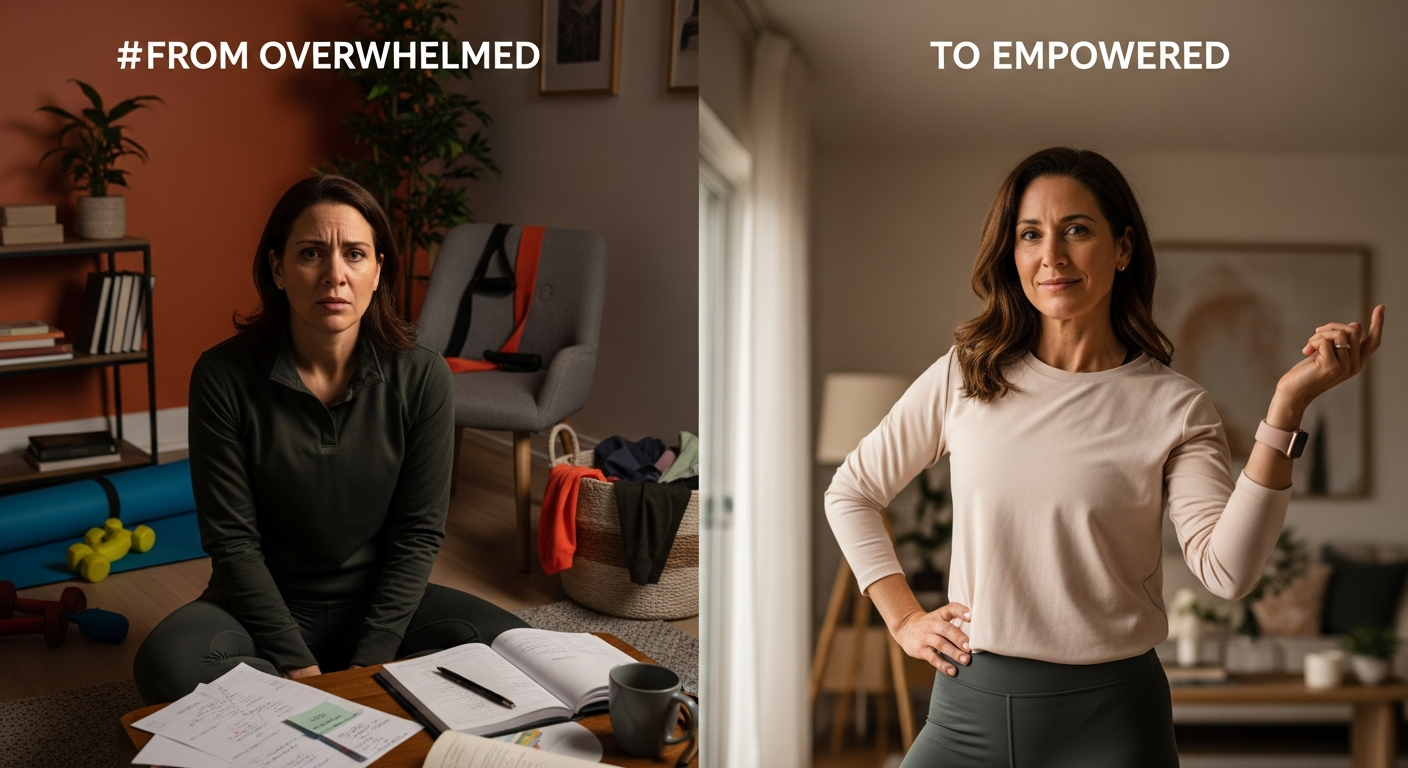
How to Survive a Fitness Challenge Without Burning Out: A Sustainable Approach to Personal Transformation
I've watched hundreds of people start fitness challenges with incredible enthusiasm, only to crash and burn three weeks in. They go from posting daily progress updates to radio silence, carrying the weight of another "failed attempt" on their shoulders.
After completing 75 Hard twice and creating my own challenge program, I've learned something crucial: the difference between quitting and succeeding isn't willpower – it's strategy.
Most fitness challenges set you up to fail by treating you like a machine instead of a human being. They demand perfection from day one, offer no flexibility for life's curveballs, and measure success purely by completion rates rather than sustainable transformation.
This approach to fitness challenge survival isn't about lowering standards. It's about building a framework that creates lasting change without destroying your mental health in the process.
Understanding Challenge Burnout
Challenge burnout happens when the mental and physical demands exceed your capacity to recover and adapt. It's not a character flaw – it's a predictable outcome when programs ignore basic human psychology.
The most common reasons people fail fitness challenges have nothing to do with physical capability:
All-or-nothing mentality creates a house of cards. Miss one workout due to a work emergency, and suddenly the entire challenge feels ruined. I've seen people quit on day 23 because they missed one task, even though they'd completed 138 out of 139 required activities.
Social isolation develops when challenges consume every waking moment. Your friends stop inviting you out because you can't be flexible with timing. Your family resents the rigid schedule that prioritizes workouts over dinner together.
Decision fatigue accumulates as you make hundreds of micro-decisions daily. What workout? Which route for cardio? How to fit reading in? When to do stretching? By week three, your brain is exhausted from constant planning.
Perfectionism paralysis strikes when you realize you can't maintain the intensity forever. Instead of adjusting expectations, many people quit entirely rather than accept "imperfect" progress.
I experienced this firsthand during my first 75 Hard attempt. By day 40, I was physically strong but mentally fried. Every decision felt monumental. Missing my son's baseball game for a workout felt wrong, but breaking the rules felt worse.
The Mental Toll of Strict Programs
Rigid fitness plans create what psychologists call "psychological reactance" – the human tendency to rebel against overly restrictive rules. The stricter the program, the stronger the eventual rebellion.
Traditional challenges operate like authoritarian governments: follow the rules exactly, or face complete failure. This binary thinking doesn't match how real life works or how sustainable change happens.
Cognitive load becomes overwhelming when you're tracking multiple daily tasks with zero flexibility. Your brain, which normally automates healthy habits, instead stays in constant vigilance mode. This is mentally exhausting and unsustainable long-term.
Identity pressure builds when your entire self-worth becomes tied to perfect challenge completion. You're not just exercising – you're proving your worthiness as a human being through daily task completion.
Relationship strain develops as the challenge takes priority over family time, social connections, and spontaneous moments that make life meaningful. I remember snapping at my wife because she suggested we grab dinner with friends on a Saturday – it would mess up my meal timing.
The most damaging aspect of strict programs isn't the physical demands – it's the message they send about your relationship with health and fitness. They teach you that progress only counts if it's perfect, that flexibility equals weakness, and that your worth depends on never missing a day.
This creates a boom-bust cycle where people alternate between periods of extreme discipline and complete abandonment of healthy habits.
The 100 Sharp Approach to Sustainable Progress
When I created 100 Sharp, I started with one question: how do you maintain challenge intensity while preserving mental health and family relationships?
The answer wasn't to make things easier – it was to make them more human.
Our 60 Sharp challenge includes six daily tasks over 60 days, similar to other programs in scope and difficulty. The difference lies in three key innovations that prevent burnout while maintaining accountability:
Grace days acknowledge that life happens without making it an excuse factory. You get two emergency days to use when genuinely needed – sick kids, work crises, family emergencies. This removes the all-or-nothing pressure that destroys so many attempts.
Sunday Family Day makes all tasks optional, recognizing that relationships matter more than perfect completion rates. Spend time with people you love without guilt or scheduling conflicts.
Progressive difficulty scales with your growing capacity. Instead of doing 75 pushups from day one, you start with 11 on day one and build to 70 by the end. Your body adapts gradually rather than getting shocked into injury or exhaustion.
The 100 Sharp extreme version extends this philosophy to 100 days with eight daily tasks, including calorie tracking and cold exposure. Even at the highest level, the human-first approach remains central.
This isn't about making things easy. Both challenges are genuinely difficult and require significant commitment. But they're designed to create lasting transformation rather than temporary suffering.
The psychological difference is profound. Instead of white-knuckling through daily tasks while dreading the next 60 days, you're building sustainable systems that feel challenging but achievable.
Grace Days: Your Mental Health Safety Net
Grace days are the most misunderstood aspect of our challenge design. Critics assume they're built-in excuses for weak people. Supporters sometimes try to save them for imaginary future emergencies that never come.
Both perspectives miss the point entirely.
Grace days serve a specific psychological function: they prevent catastrophic thinking that leads to complete challenge abandonment.
Here's how traditional challenges handle disruptions: You're on day 32, doing great, feeling strong. Your daughter gets strep throat and needs to go to urgent care during your planned workout time. You have two choices: skip the doctor visit to maintain your streak, or break your challenge and start over from day one.
Most people choose option three: quit entirely and carry guilt about "failing" another program.
Grace days eliminate this false choice. You use a grace day, take care of your daughter, and continue your transformation journey the next day. The challenge stays alive, your progress continues, and your family relationships remain intact.
I've used both my grace days in previous challenges – once for a work emergency that required an overnight flight, once when I had food poisoning and couldn't safely exercise. Neither situation was a character failing or lack of commitment. Both were legitimate reasons to modify the plan without abandoning the goal.
The key is honest self-assessment. Grace days aren't for "I don't feel like it" or "I'm tired." They're for genuine emergencies that make task completion impossible or harmful.
Most people discover they don't need both grace days. Just knowing they exist removes the constant anxiety about perfect streak maintenance. This psychological safety net actually improves compliance and reduces the stress that leads to burnout.
Practical Strategies for Challenge Resilience
Surviving a fitness challenge isn't about superhuman willpower – it's about smart systems and realistic expectations. Here are the strategies I've developed after completing multiple challenges and watching others succeed and fail.
Start with minimum viable tasks rather than maximum impressive ones. Your first workout doesn't need to be a marathon training session. Your first reading session doesn't require tackling dense philosophy. Build the habit foundation before adding intensity layers.
Batch similar activities to reduce decision fatigue. Do your reading and skill development back-to-back. Combine outdoor time with transportation when possible. I read during my walk to the coffee shop, hitting two tasks simultaneously without feeling rushed.
Create environmental scaffolding that makes success easier and failure harder. Lay out workout clothes the night before. Keep your book visible on the kitchen counter. Put your phone charger in the bedroom at 8:30 PM so digital sunset happens naturally.
Track systems, not just outcomes to maintain motivation during inevitable plateaus. Instead of only measuring weight loss or strength gains, track consistency metrics: how many days you completed all tasks, how your sleep improved, how your energy levels changed.
Build flexibility into rigid requirements where possible. Your 40-minute workout can be strength training, yoga, hiking, or dancing. Your outdoor time can be gardening, walking, or playing with kids. The structure provides accountability while allowing personal preferences.
Plan for known obstacles rather than hoping they won't happen. If you travel frequently, research gym options and walking routes in advance. If you have young kids, identify backup workout options for home. If you work late unpredictably, have contingency plans for task timing.
Connect with other challengers but avoid comparison traps. Share struggles and victories, ask for advice, celebrate others' progress. But remember that everyone's journey looks different – comparing your inside experience to someone else's highlight reel kills motivation.
The most successful challengers I know treat each day as independent while maintaining long-term vision. Yesterday's missed task doesn't define today's potential. Tomorrow's uncertainty doesn't undermine today's effort.
Digital Sunset and Mental Recovery
The Digital Sunset task – putting your phone on the charger at 9 PM – might seem like the least important part of our challenge structure. It's actually one of the most transformative.
Screen time before bed destroys sleep quality, which undermines every other challenge component. Poor sleep reduces workout performance, increases junk food cravings, impairs learning ability, and decreases emotional regulation. You can't out-discipline bad sleep habits.
But Digital Sunset offers benefits beyond sleep optimization. It creates a daily transition ritual that signals the end of work mode and the beginning of personal time. This mental shift is crucial for challenge sustainability.
I discovered this accidentally during my first strict challenge attempt. I was checking emails until bedtime, which meant my brain never fully disconnected from work stress. My workouts suffered because I was mentally exhausted before I even started exercising.
Digital Sunset forces you to find non-screen evening activities: reading, journaling, talking with family, preparing for tomorrow, stretching, or simply sitting quietly with your thoughts. These activities provide genuine mental recovery that screen scrolling can't match.
The timing matters too. Nine PM gives you enough flexibility for evening commitments while ensuring adequate wind-down time before sleep. It's early enough to feel significant but late enough to be realistic for working adults.
Most people resist this task more than the physical challenges. We're addicted to constant stimulation, and the thought of evening phone separation creates genuine anxiety. This resistance reveals how much we need the boundary.
Start with small steps if going cold turkey feels impossible. Put your phone in another room during dinner. Charge it in the kitchen instead of the bedroom. Use an actual alarm clock instead of your phone. Each small separation builds comfort with digital boundaries.
The compound effects are remarkable. Better sleep improves workout performance. Reduced evening screen time increases reading completion. Less social media comparison decreases challenge-related anxiety. More family conversation strengthens relationships that support your transformation.
Digital Sunset doesn't just help you complete other challenge tasks – it addresses one of the root causes of modern stress and distraction that make sustainable change difficult in the first place.
Skill Sharpening: Beyond Physical Transformation
Most fitness challenges treat you like a body that needs fixing rather than a complete human being capable of growth in multiple dimensions. This narrow focus creates identity problems when the challenge ends and physical improvement plateaus.
Skill Sharpening – spending 10 minutes daily learning something new – addresses this limitation by ensuring your challenge creates intellectual and creative growth alongside physical transformation.
The psychological benefits extend beyond just learning new information. Skill development activates neuroplasticity – your brain's ability to form new neural pathways and adapt to challenges. This mental flexibility directly supports your ability to handle other challenge difficulties.
Choose skills strategically based on long-term interests rather than short-term convenience. Learning Spanish creates more lasting value than scrolling through random YouTube tutorials. Practicing guitar, studying photography, or developing coding skills builds genuine competence over time.
Stack skills with other tasks when possible without compromising quality. Listen to language learning podcasts during outdoor walks. Practice photography during your outdoor time. Learn about nutrition science while meal prepping.
Focus on fundamentals rather than advanced techniques. Ten minutes daily of basic piano scales builds more long-term ability than attempting complex pieces. Consistent foundation work compounds over time while sporadic advanced practice creates frustration.
I used my Skill Sharpening time to learn basic woodworking during my first 100 Sharp attempt. Ten minutes doesn't sound like much, but over 100 days, it totaled nearly 17 hours of focused practice. I built genuine competence and completed several projects for our home.
The key insight: transformation happens in multiple dimensions simultaneously when you create space for it. Physical challenges change your body. Reading expands your mind. Skill development builds competence. Together, they create comprehensive personal growth that extends far beyond the challenge timeframe.
Track skill progression to maintain motivation during difficult periods. Take photos of art projects, record yourself playing music, document coding projects, or maintain a learning journal. Visible progress in skill areas often continues even when physical progress plateaus.
Connect skills to other life areas for maximum impact. Learning photography improves your ability to document challenge progress. Studying nutrition science enhances your meal planning. Developing communication skills helps you share your transformation story with others.
Most importantly, Skill Sharpening creates an identity shift from someone who "exercises and diets" to someone who pursues continuous improvement across all life dimensions. This identity change makes healthy habits feel natural rather than forced long after the formal challenge ends.
The goal isn't to become an expert in 60-100 days – it's to establish learning as a daily practice that continues growing your capabilities throughout life.
Building Long-Term Sustainability
The ultimate test of any fitness challenge isn't whether you complete it – it's whether the habits stick afterward. Too many people treat challenges as temporary suffering that ends with a celebration meal and return to old patterns.
Sustainable transformation requires thinking beyond the challenge timeframe from day one. Every daily task should build systems you can maintain long-term, not just endure temporarily.
Design your challenge lifestyle to resemble your desired long-term lifestyle, not your maximum temporary effort. If you can't work out 90 minutes daily forever, don't do it during your challenge. If you can't read 30 pages daily long-term, start with 10 pages and build gradually.
Practice flexible implementation of challenge principles rather than rigid rule following. The goal is to internalize the value of daily exercise, not to become dependent on exactly 40 minutes at exactly 6 AM. Learn to adapt the principle to changing circumstances.
Develop intrinsic motivation beyond external challenge requirements. Exercise because you enjoy feeling strong, not just because the rules demand it. Read because you value learning, not just to check a daily box. When external structure ends, internal motivation sustains the behavior.
Create natural accountability systems that extend beyond challenge completion. Join ongoing fitness groups, schedule regular activities with friends, or maintain challenge connections with people who share your values.
The most successful challenge graduates I know treat the formal challenge as training for a lifetime of intentional living. They use the structure to experiment, discover preferences, build confidence, and establish sustainable routines.
They also maintain some elements of challenge thinking permanently: daily non-negotiables, regular goal setting, consistent self-improvement focus, and accountability to their future selves.
Your Sustainable Challenge Journey Starts Now
Fitness challenge survival isn't about gritting your teeth and enduring temporary discomfort. It's about designing a transformation system that builds lasting change while preserving your mental health and important relationships.
The difference between sustainable challenges and burnout-inducing programs isn't difficulty level – it's human-centered design that acknowledges life's complexity while maintaining accountability to your goals.
Whether you choose our 60 Sharp challenge with its balanced approach to daily tasks and built-in flexibility, or push yourself with the more intensive 100 Sharp program, the key is starting with a framework designed for real humans living real lives.
Your transformation doesn't require perfect execution – it requires consistent effort, honest self-assessment, and smart systems that support long-term success rather than short-term heroics.
The question isn't whether you can survive a fitness challenge. It's whether you're ready to build the sustainable habits that create lasting change long after the challenge ends.
Ready to start your sustainable transformation? [Explore our challenge options](/challenges/60-sharp) and join a community that believes in being hard but human.